On the workbench, the first dimension I record is never the length of the piece. It is the finish. A newly sealed or oiled surface changes how wood reflects light, how a ruler feels in the hand, and — most importantly for made-to-order work — how thick the final object actually is.
Finish Is Part of the Measurement
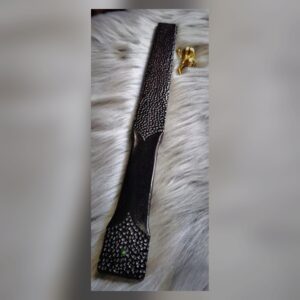
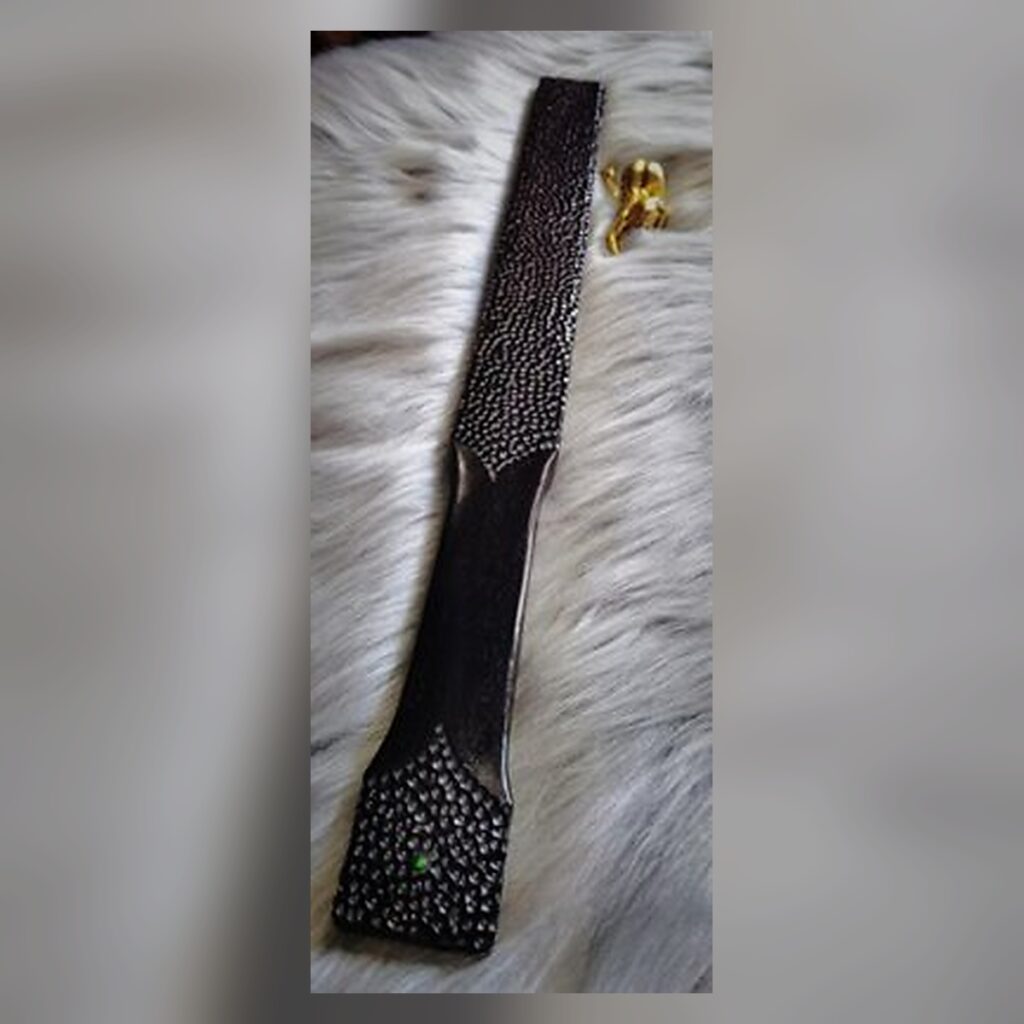
A dark hardwood piece may look consistent from one end to the other, but the finish is a separate layer. It can cover a lively grain, tone down a bright edge, and add a measurable amount of depth. The Hammered Grain Ruler, for example, is listed in dark hardwood. In the Rulers & Canes collection, the final dimensions on the listing include that finish. What you see in the reference photograph is the finished object, not a raw blank.
This distinction matters more than many collectors expect. When a piece is made to order, the available dimensions are not guesses. They are measured after the finish has cured and the hardware has been set. Metal hardware — in this case, the small fittings that give the ruler its character — is also subject to small tolerances. A brass insert may sit flush or rise a fraction higher depending on how the surface was finished. Recording the piece as it will be delivered prevents later confusion.

The Workbench Habit
Behind the bench, the process for preparing useful dimensions follows a deliberate sequence. First, the finish must be fully dry or cured; measuring a wet surface gives a false reading. Second, the piece is measured in the same room where it will be stored, because temperature and humidity can subtly change dark hardwood. Third, the measurement is taken twice: once along the visible outer length and once over any raised detail. The second number is the one that appears in the listing.
That final number is not an average or an estimate. It is the usable dimension for a private collector — the distance you will actually feel and see. For an adult accessory, this distinction is more useful than a raw wood spec, because your consideration of the piece involves its entire finished surface.
Sizing Considerations for a Private Order
If you are choosing between two similar pieces, or thinking about a custom length, the most reliable point of comparison is the final finished dimension. Ask yourself what you will do with the piece when you hold it. Do you want a smooth, contained weight or a longer line through the hand? The finish can change both. A matte surface feels slightly grippier; a sealed surface feels cooler at first touch. There is no correct choice — only the choice you can make with clear information.

Where metal hardware is present, the hardware should not alter the intended dimension. It should sit naturally within the piece, adding color and texture rather than changing the measurable length. If a custom order asks for a length that brings a fitting too close to an end, the maker will flag that in advance. This is part of a made-to-order conversation: nothing is promised until details are confirmed.
Care That Keeps Measurements Honest
The finish you receive is a protection, and it responds to how you store the piece. Keep it away from prolonged bright light, from radiators, and from damp cloths. A dry, soft cloth for surface dust is enough. With time, a natural oil finish may warm and darken slightly. That is not a defect; it is the material continuing to live. The dimensions will not change from ordinary use, but the color can mature — which is part of the appeal of handmade finish.
If the piece has metal hardware, check that the fittings are seated before and after long storage. Metal should be polished only with a dry cloth unless instructed otherwise. Avoid soaking the piece, and do not bend hardware to adjust it.
A Quiet, Private Custom Order
Every conversation about a custom piece is private. You do not need to explain why you want a certain dimension. A simple note with the final length you are considering, along with any finish preference, is enough. Availability is confirmed before checkout, and the piece is made for you alone. This is how a workbench stays honest: measure, finish, ask, and answer — without guessing.
Privacy and trust
Private choices deserve clear information. Read the privacy and discreet-order notes before you decide.