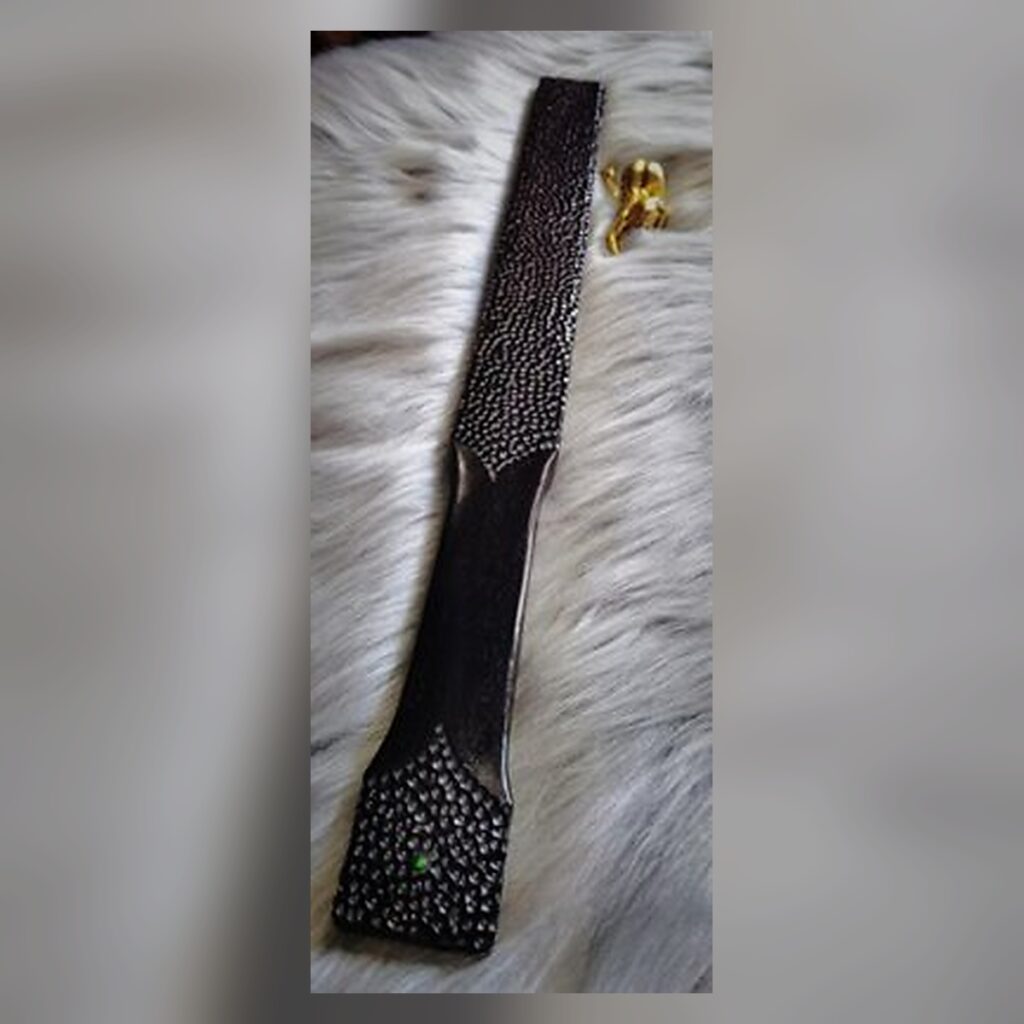
A photograph shows the character of a piece, not every specification of the one you will receive. That difference matters with a made-to-order hardwood ruler. The visible grain, edge profile and surface finish may be part of the attraction, but a buyer should not have to infer construction details from a single image.
Imagine a hypothetical buyer comparing two photographs after deciding they prefer a dark wooden ruler. One view makes the surface look smooth; another catches light along an edge. The buyer begins to draft an order based on those impressions. Before paying, they separate what the listing actually states from what the lighting merely suggests, then ask the seller to confirm the details that would affect their choice.

Start with the facts already stated
The Hammered Grain Ruler listing identifies dark hardwood as its material profile and says it is made to order. The gallery provides photographs of the piece. Those are useful starting facts. They do not name a wood species, specify every coating or promise that another piece will show identical grain.
If a wood species, shade or exact surface treatment matters, ask for confirmation rather than treating a color on your screen as evidence. Wood can look different under different light, and a photograph cannot describe a finish’s maintenance requirements. The most useful enquiry names the product and asks about the particular feature you need to understand.
Put size and edge details in plain language
Dimensions need units and a direction: overall length, widest section, thickness and handle length are different measurements. If a listing presents numbers without clear labels, do not assign your own interpretation. Ask the shop to identify each measurement and confirm whether it applies to the pictured version or the option you intend to order.
An edge is also more than a line in a photo. You can ask whether the edge profile is uniform, whether a particular area is rounded and whether the proposed finish changes its appearance. This is a question about the physical product, not an invitation to assume how anyone will use it. Keep the request descriptive and specific.

Ask for care advice tied to the final finish
The listing advises dry storage, avoiding abrasive cleaning and wiping the surface with a soft cloth after handling. If you request a different finish, confirm whether those instructions still apply. Do not select a cleaner, oil or polish based solely on the phrase “dark hardwood.” A coating can change the appropriate care, and the seller should identify guidance for the actual finish supplied.
Keep the answer with the confirmed specifications. Our custom enquiry page offers a place to state the product name and the details you want checked before committing. A written response makes it easier to compare the proposed item with the listing later.
Confirm production and delivery as separate dates
Made to order does not, by itself, tell you when a parcel will arrive. Ask when production can begin, what must be confirmed first and how dispatch timing will be communicated. Then review delivery availability for your destination. Do not turn an estimated production window into a promised arrival day.
The photograph can start an enquiry. A clear specification, care answer and timing confirmation are what make the final order understandable.