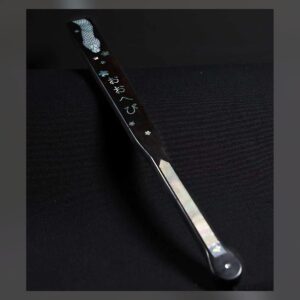
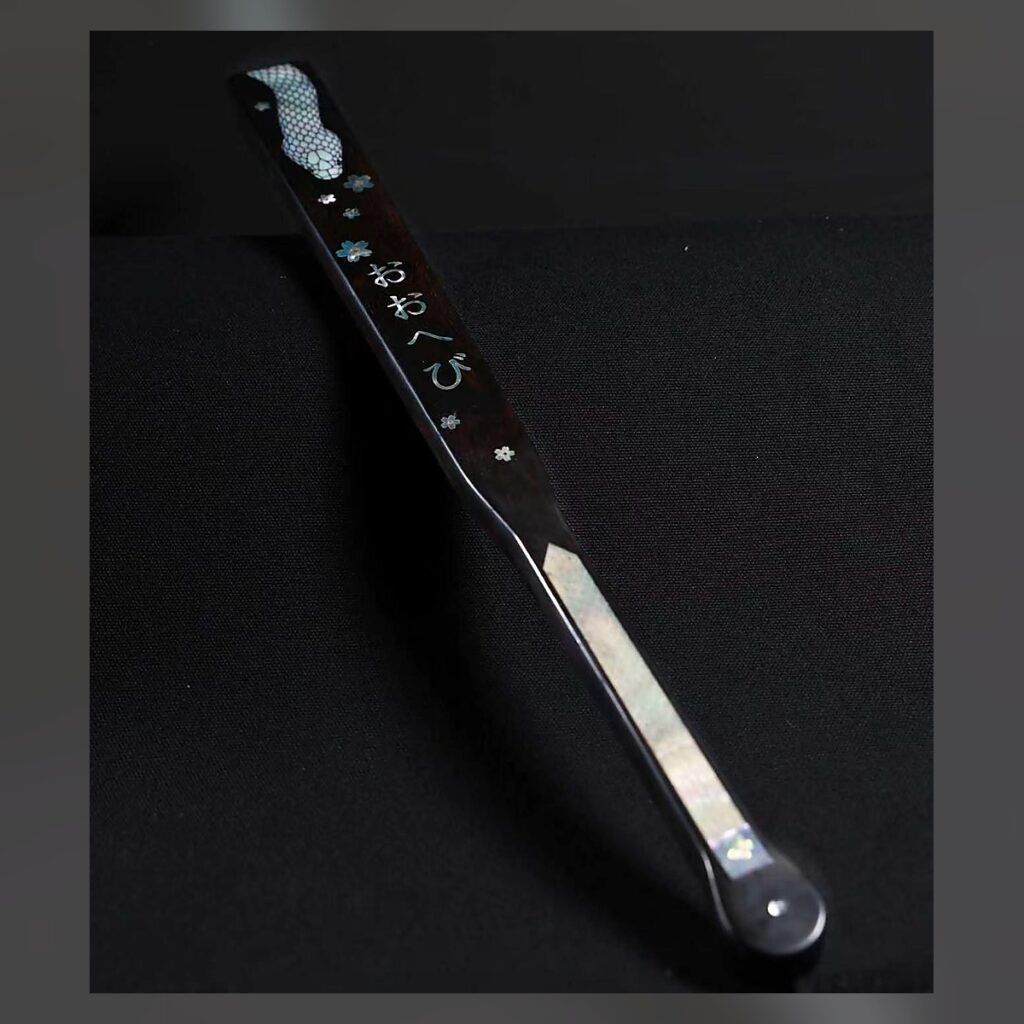
A glossy photograph does not tell you which finish covers a wooden accessory. Shine is something you can see; the identity of a coating is a specification that needs confirmation.
Consider a hypothetical owner looking at a decorated piece beside a bottle of furniture polish. The photograph looks smooth and reflective, and the bottle says it is suitable for wood. It is tempting to treat those two observations as a complete care instruction. They are not. Neither identifies the finish on this particular item or confirms how its decorative details should be treated.

Begin with what the listing actually confirms
The Phantom Serpent listing identifies its material profile as dark hardwood. Its product photograph shows a dark, decorated piece with lettering and reflective detailing. Those are useful references for identifying the item, but the material description does not name a wood species, coating or cleaning chemical.
Do not turn the product name, colour or reflections into an additional material claim. A photograph also cannot confirm the composition of a reflective detail. Keep those unknowns separate from the information actually supplied. An unanswered specification remains unanswered even when the overall appearance seems familiar.
Ask about the whole surface, not just the wood
A clear enquiry can say: “For the published Phantom Serpent design, what finish is present, and which cleaning method is approved for the decorated areas?” This names the item and the missing information without asking the shop to diagnose a surface from an unrelated photograph.
If a particular cleaner is under consideration, provide its exact name and relevant label information. Ask whether it is suitable for the existing piece; do not assume that a description such as gentle or natural settles the question. There is no need to include private reasons for buying the item or photographs of other people.

Do not let a cleaner label supply the missing answer
The listing’s general care note says to store the piece dry, avoid abrasive cleaning and wipe the surface with a soft cloth after handling. It also directs buyers to confirm guidance for the listed finish before purchase. That wording does not identify a polish, oil, wax or disinfectant as approved.
Stay within the instructions that have actually been confirmed. Do not add a new treatment merely because its packaging mentions wood. The folded cloth in this article’s editorial illustration represents planning a care question; it is not a demonstration of a cleaning procedure. The product photograph, not the illustration, identifies the listed item.
Keep the answer tied to the existing design
Use the contact page to clarify the current product’s finish and care before ordering. ShuoMu Atelier sells its published designs and listed options only. It does not accept new requests to change a material, coating, decoration or design.
When an item-specific answer is supplied, retain its product reference and wording for later use. An answer about a different piece should not silently become the care instruction for this one. If the finish remains unconfirmed, acknowledge that limit instead of replacing it with a guess based on the photograph.
Use the photograph to recognize the design. Use confirmed specifications, not its shine, to decide how to care for it.
Product & Order Questions
Questions about a listed product or an existing order? Contact ShuoMu Atelier on WhatsApp.
WhatsApp: +63 965 401 5278