Knowing what another adult likes does not give you permission to introduce them by it. A private conversation about an accessory is not an agreement to make that preference public.
Consider a hypothetical dinner with friends. Earlier that week, two adults privately looked at a product page together. During dinner, one mentions the other person’s interest as an amusing detail: “You should see what they were looking at.” No photograph changes hands, but the private subject has already become a group conversation. The person being discussed now has to respond in front of an audience they did not choose.

Separate the subject from the audience
Consent to discuss something with you applies to that conversation. It does not automatically include a friend, a group chat or a social account. Even an audience you regard as understanding may be an audience the other person would rather keep outside this part of their life.
Before sharing, ask a concrete question: “May I mention that we looked at this accessory when I speak to Alex?” Name the recipient and the detail. A broad question such as “You are not embarrassed, are you?” puts pressure on the person to defend their confidence instead of making a genuine choice about disclosure.

Do not replace someone’s words with a label
Interest in a material, shape or photograph does not establish an identity. Someone may be comparing finishes, asking about dimensions or simply trying to understand a term. Describing them as a particular kind of person can say far more than they said themselves.
If sharing has been agreed, stay within the agreed wording. “We discussed the design” is different from assigning a role or declaring an ongoing preference. Permission to mention a conversation is also not permission to display screenshots. Those may reveal names, timestamps or unrelated messages that were never part of the question.
Product facts can stand without personal disclosure
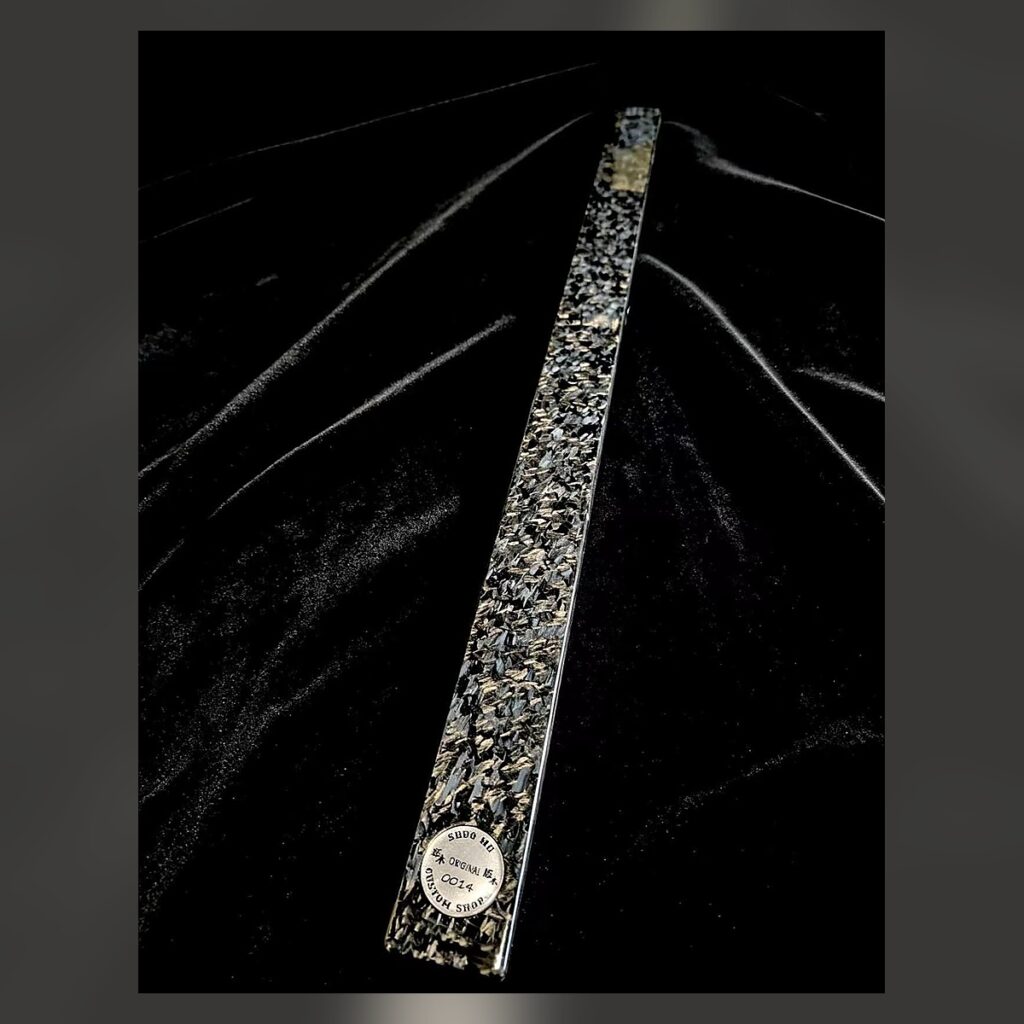
The Forged Carbon Ruler listing identifies carbon fiber and stainless steel hardware, with dimensions of 45 by 3 by 0.8 centimetres. A question about those listed specifications can be asked without identifying the adult who first noticed the product.
Use the contact page for an unresolved question about an existing item. The shop does not need a partner’s private explanation to clarify a product detail. ShuoMu Atelier offers published designs and their listed options; it does not accept new customization requests. Neither a product specification nor a seller’s reply establishes anyone’s personal boundaries.

Correct an overshare without extending it
In the hypothetical dinner scene, the person who introduced the subject can stop it: “That was a private conversation, and I should not have brought it up.” There is no need to repeat the detail while explaining the mistake. Redirect the conversation rather than asking the other adult to reassure everyone that it is fine.
Later, ask privately whether any practical correction would help. They may want a message removed, a recipient asked not to repeat it, or simply the subject left alone. Do not promise that information can be retrieved once others have seen it. Take the steps you can actually take, and let the person decide whether they want further discussion.
A private preference belongs in the audience its owner chooses. Ask before widening that audience, and keep the answer specific.
Product & Order Questions
Questions about a listed product or an existing order? Contact ShuoMu Atelier on WhatsApp.
WhatsApp: +63 965 401 5278