The first thing I check is the direction of the hide’s natural fibers. Run a hand over a piece of vegetable-tanned leather and you can feel a subtle nap — a grain that leans one way, like hair on a well-groomed animal. Cut against that lean and the edge will eventually fray, the buckle holes will stretch unevenly, and the piece will lose its shape long before it should. So before any tool is picked up, my thumb traces the surface, mapping the grain’s flow. This is not hesitation. It is confirmation.
The Hide’s Own Map
Leather is never a blank canvas. It arrives with a history: a scar from a healed wound, a stretch mark from an old fence, a patch where the color took slightly darker in the vat. Each mark is neither flaw nor defect — it is evidence of the animal’s life. My task is to decide which marks are worth keeping and which would weaken the final piece. For a collar that will rest against the throat, I look for a section where the bend is neither too stiff nor too supple, where the thickness measures consistent within a few tenths of a millimeter on my gauge. I also press the leather with my fingernail. The imprint should recover slowly. If it stays, the hide is too soft for a structure that needs to hold a buckle without stretching.
Size Is Not a Number
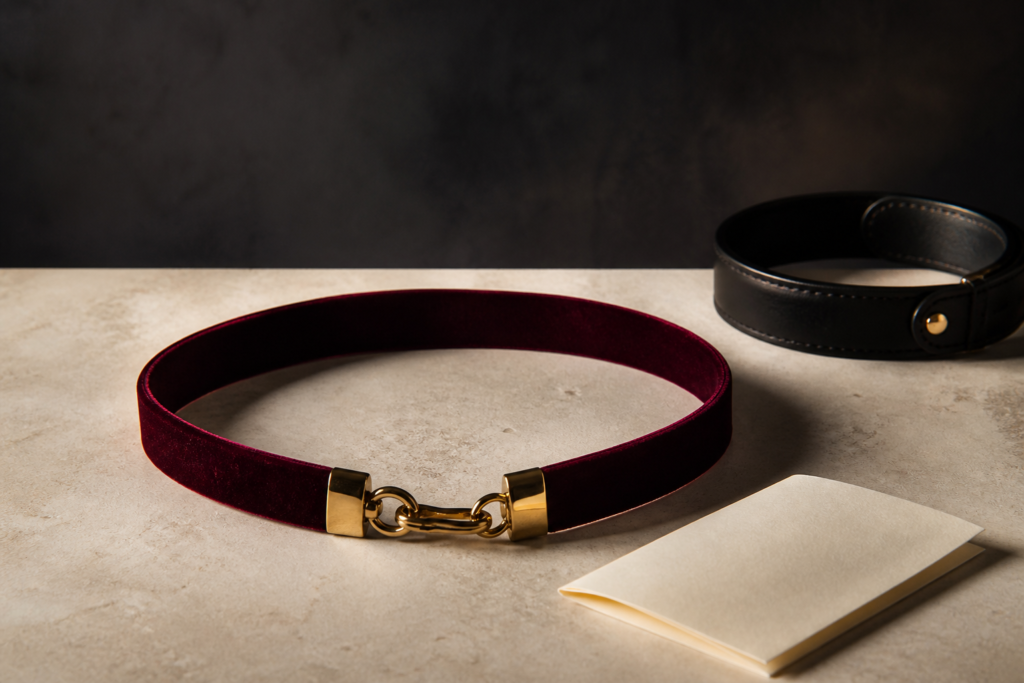
Custom sizing is often reduced to a length in centimeters, but the workbench knows better. A collar that measures perfectly on a ruler can sit too high on a long neck or twist against a round one. So I confirm three points: the circumference where the collar will sit, the space between collar and throat (two fingers is a good start, but everyone’s comfort differs), and the angle of the buckle. I ask the person to measure twice — once relaxed, once after swallowing — because the throat changes when we move. This is not about precision alone. It is about respecting the fact that the body is alive, and the object must move with it.
Care Begins at the Bench
The finish is not just for aesthetics. A properly burnished edge and a sealed surface are the first line of defense against sweat, moisture, and the natural oils of the skin. Before cutting, I apply a thin layer of neatsfoot oil to the back of the hide, letting it soak in overnight. This step is often skipped in production lines, but it is the reason a handmade piece ages gracefully rather than cracking. I also confirm the stitching holes are punched at a consistent angle, and that the thread used is not too waxed — because over-waxing can attract dust and stiffen the seam. These are small decisions, but they add up to a piece that feels like it was always part of its owner’s life.
The Minute Before the Blade
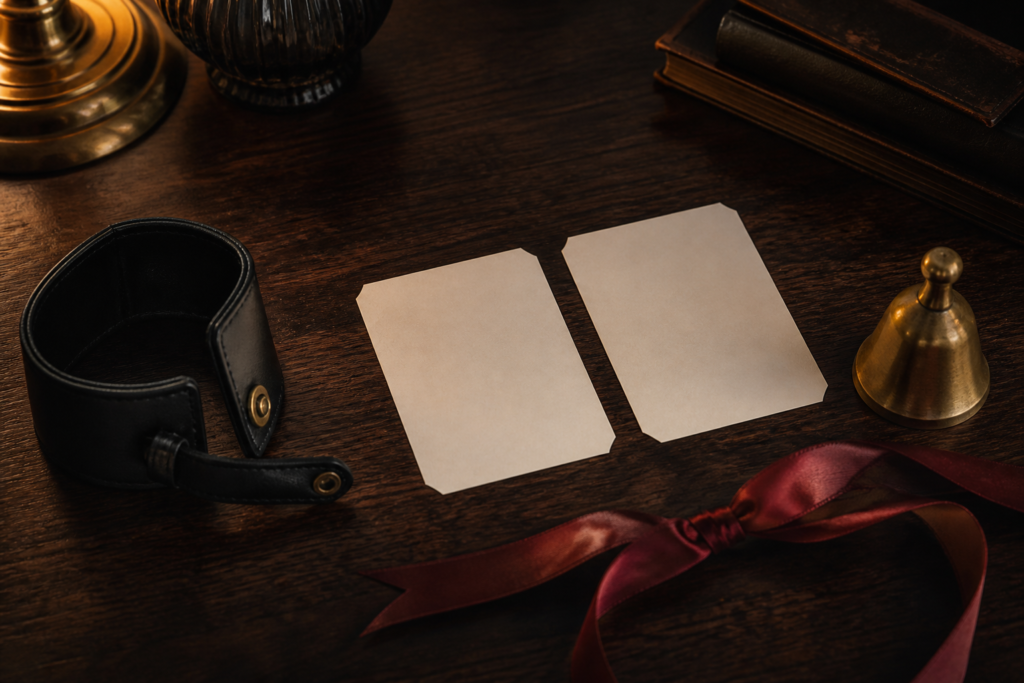
Once the hide is chosen, measured, and marked, I let it rest for an hour. This pause is not a ritual; it is practical. It gives the leather time to adjust to the humidity of the workshop, and it gives me time to re-read each pencil line. If anything looks even slightly off, I redraw. The blade is sharp, but the thinking is sharper. When I finally cut, the motion is continuous, pressing through the full thickness without hesitation. The sound is a low, dense thud, and the edge comes away clean.
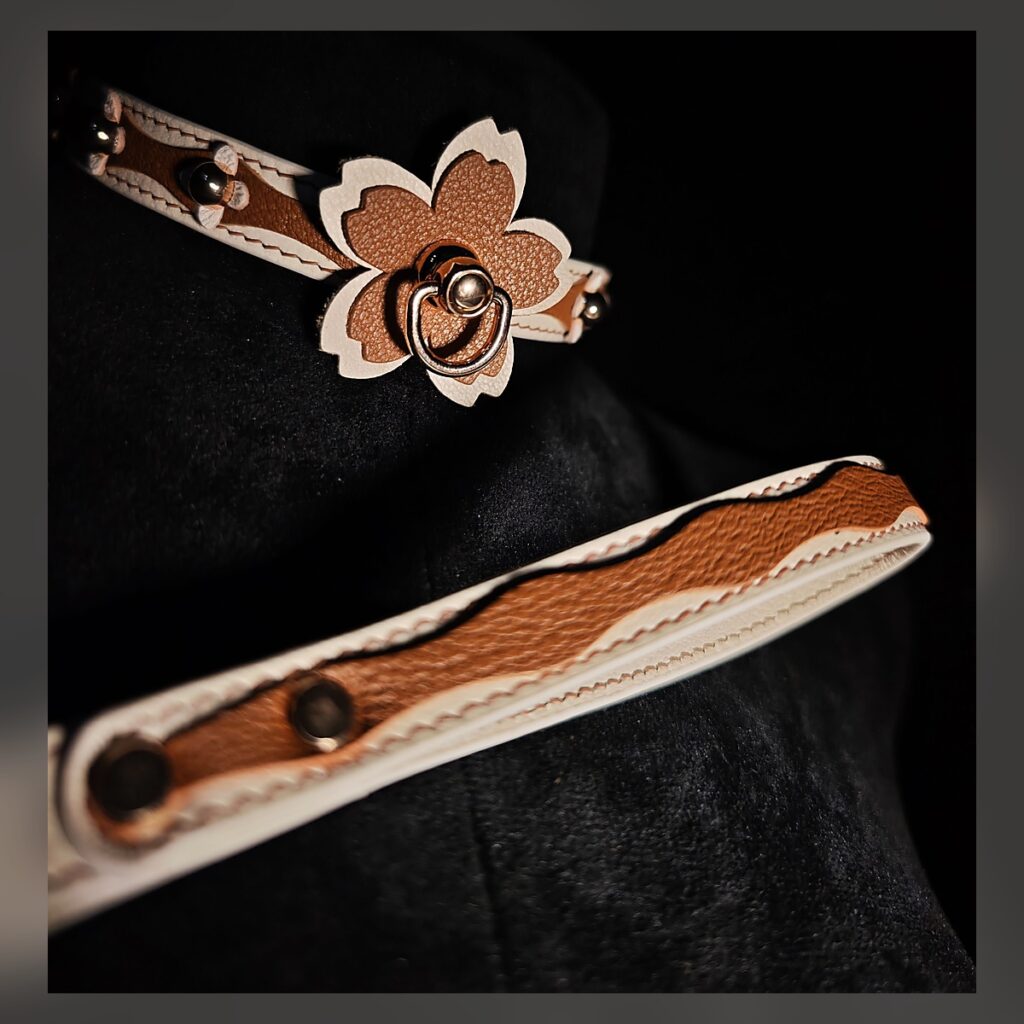
Every piece that leaves this bench begins with these quiet confirmations. They are not showy, but they are the difference between an accessory that decorates and one that honors the person who wears it. Custom sizing is always available, and a short note is enough to start that conversation — it is, in its own way, another confirmation made before the cut.
Privacy and trust
Private choices deserve clear information. Read the privacy and discreet-order notes before you decide.