A material list does not show how two surfaces meet at an edge. On a made-to-order object, that boundary can matter for appearance, storage and cleaning. A buyer should ask about the actual finish and edge treatment instead of assuming a photograph answers every construction question.
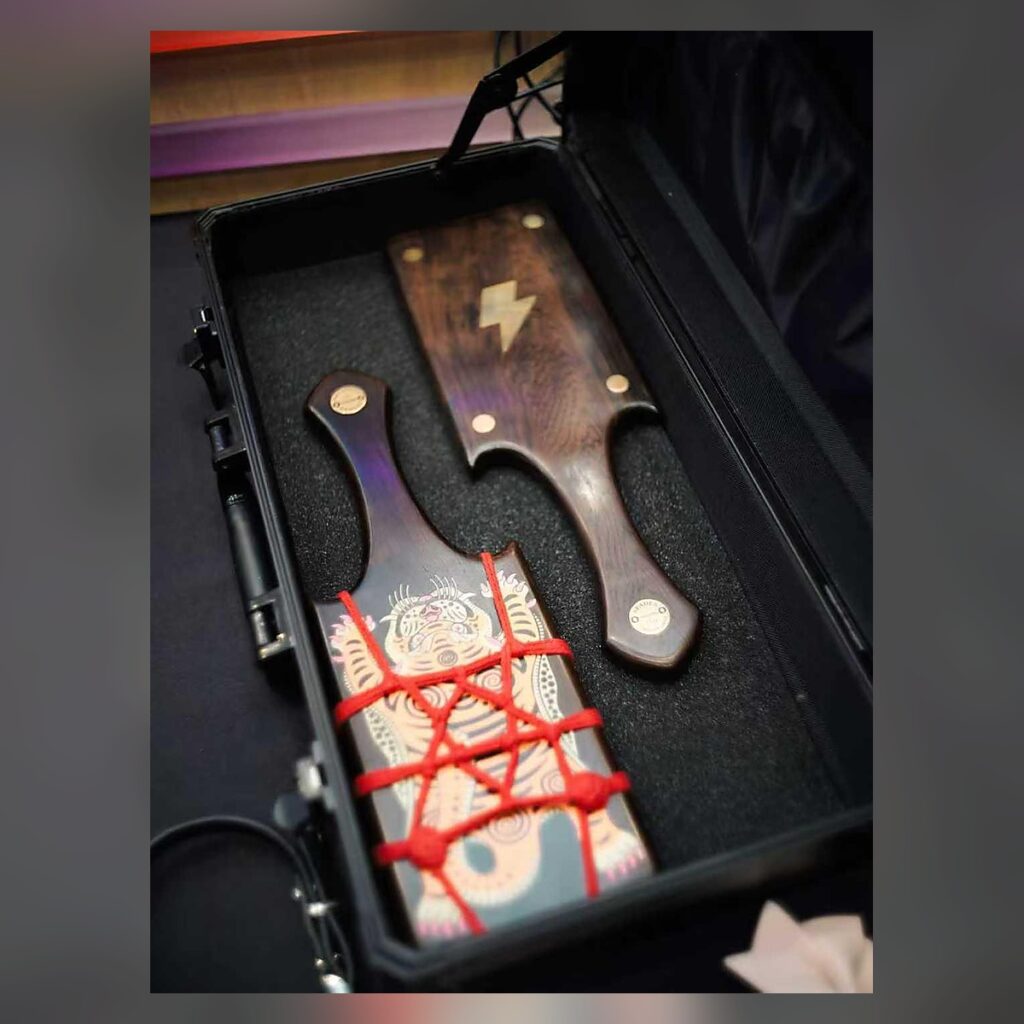
Imagine a hypothetical adult comparing a paddle that combines a dark wooden body with carbon fiber and metal hardware. The product image shows the overall design, but the buyer cannot tell which edge treatment is included in the quoted version. They ask for a written description and a close view of the relevant detail before accepting a custom specification. That is a practical product question, not an invitation for the seller to invent an answer.

Start with the verified material list
The Rai Source Paddle listing identifies carbon fiber, dark hardwood, stainless steel hardware and technical hardware. It gives dimensions of 35 by 11 by 2.0 cm and says the piece is made to order. These facts establish the listed item. They do not tell a buyer how every custom finish or edge change would be made.
Ask which visible surfaces use each material and whether the offered version matches the gallery image. If a different color or detail is proposed, have the seller identify it in the final specification. A material name should not be used as a shortcut for an unverified promise about strength, weight or surface treatment.
Label the measurements and the edge
The dimension sequence should be discussed as length, width and thickness only after the seller confirms that interpretation. Ask whether the stated thickness includes raised hardware or only the main body. If storage space is limited, the answer matters more than an estimate made from a photograph.
For the edge, ask whether it is rounded, sealed or otherwise finished in the chosen version. Avoid inventing a technical term if the seller has not used one; a close photograph and plain written description may be clearer. Record any agreed change beside the dimension line so that the order does not mix old and new details.

Care for the joined materials conservatively
The product page advises dry storage, a soft cloth after handling and avoiding abrasive cleaning. Treat this as the baseline. Do not assume that a solvent safe for one component is safe for the adjacent surface. If dust gathers around hardware, ask the shop for item-specific guidance before using a tool that could scratch the finish.
Store the item so its hardware does not press into another object. The shop collection offers other pieces for comparison, but care instructions should follow the exact materials and finish of the one purchased. A different design may need a different answer.

Approve one made-to-order brief
Before payment, confirm the listed materials, labeled dimensions, edge description, finish, production estimate and total. If a close photograph shows an example rather than the exact custom version, say so in the record. Ask the seller to correct any mismatch before work begins.
Good detail makes an object easier to choose and easier to care for. The edge deserves the same clarity as the broad face.