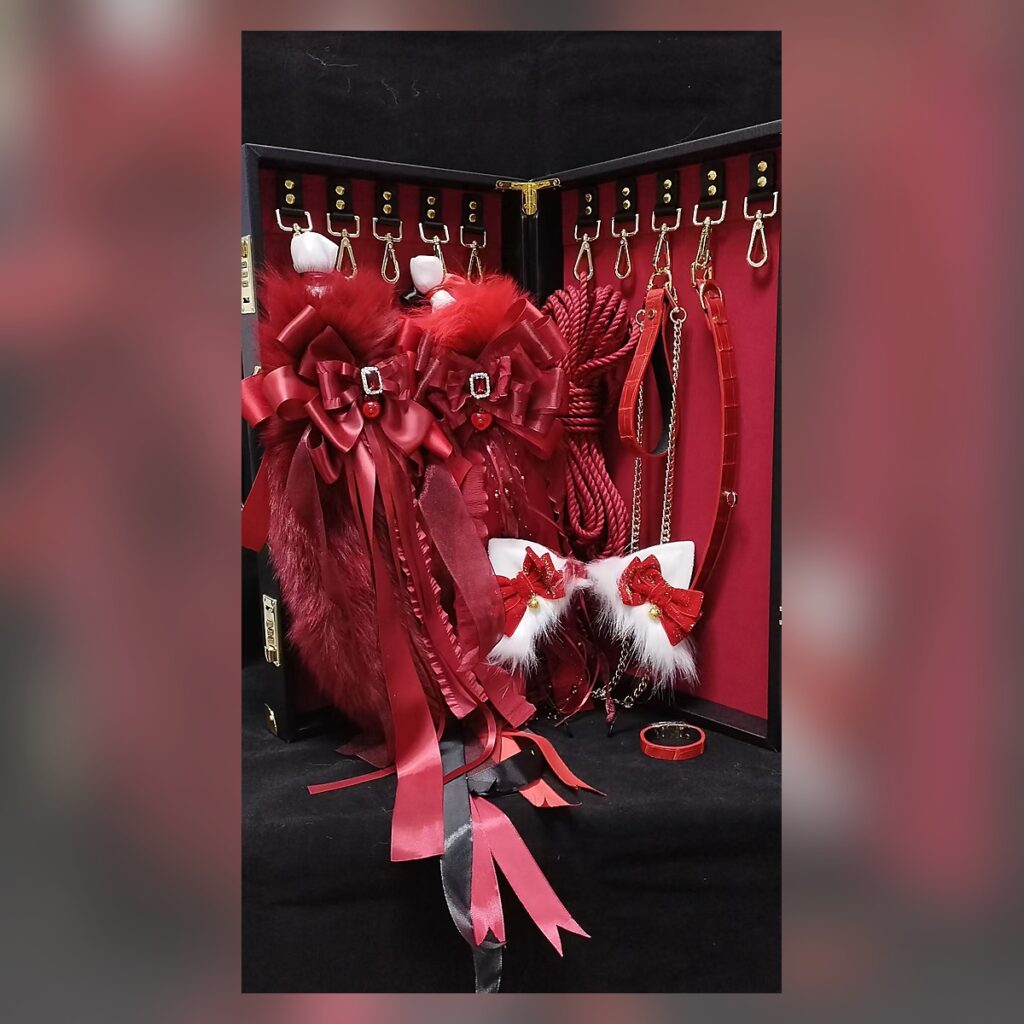
There is a moment, just before the first touch or the first word, that holds the entire weight of what is about to unfold. It is a pause, heavy with intention, where two people stand at the threshold of a shared experience. In that silence, the air itself seems to charge with possibility. This is not a scene of force or imposition; it is a deliberate offering of trust, freely given and gratefully received. The atmosphere is one of mutual consent, where every boundary has been discussed, every signal understood. It is a private language spoken without words, a rhythm of breath and stillness that says, ‘I am here, with you, because I choose to be.’
The Architecture of Trust
Trust in BDSM is not an abstract concept; it is a lived, tactile reality. It is built in the careful conversations beforehand, the checking in, the acknowledgment of each other’s limits. It is the agreement that power, even when exchanged, remains a gift—not taken, but handed over with clarity and awareness. This trust creates a container, a safe space where intensity can flourish without fear. The anticipation that follows is not anxiety but a kind of focused readiness, a tuning of the senses to the subtlest cues. Every glance, every pause in motion becomes a sentence in the dialogue of the scene. The body learns to listen, and the mind learns to wait.
Attentive Pacing and the Art of Suspension
Pacing in BDSM is an art form that requires attentiveness beyond words. It is the slow, deliberate build of sensation and emotion, the measured progression from one state to another. There is no rush; the goal is not to hurry toward an endpoint but to dwell in the moment, to stretch time until it feels as elastic as desire itself. The restraint—whether physical or psychological—is chosen. It is not a cage but a framework within which freedom can be experienced more acutely. The pause, the breath, the pause again: this rhythm becomes a meditation on presence. The person yielding knows they can speak a single word and stop everything. The person guiding knows that their authority is lent, not owned. This mutual awareness keeps the scene safe and profound.
Privacy and the Inner Room
BDSM, for many, is a private theater of the soul. It is not performed for an audience; it is an intimate dialogue between two (or more) people who have agreed to explore the edges of sensation and emotion. Privacy here is not secrecy but sacredness. It is the knowledge that what happens within this chosen space belongs only to those who inhabit it. This privacy allows for vulnerability without shame, for intensity without judgment. It is a room within the self that is opened by invitation only. In that room, the usual masks fall away, and something raw and real emerges—not weakness, but a kind of profound honesty.
The Afterglow of Shared Trust
When the scene ends, there is a quiet aftermath. The emotionally charged energy slowly settles like fine dust after a storm. This afterglow is a time of tenderness, of holding space for the feelings that have been stirred. It is a period of integration, where the experience is acknowledged and honored. The trust that made the intensity possible now transforms into a deeper connection, a shared understanding that does not demand words. The echo of the experience lingers in the body and the mind, a reminder that the pause—the freely given pause—was the most powerful part of all. It was the moment when two souls agreed to step into the unknown together, bound not by force but by choice.
Privacy and trust
Private choices deserve clear information. Read the privacy and discreet-order notes before you decide.