
There is a particular stillness that descends when you decide to reach out for something private. The screen glows, the words wait, and you pause. What do you share? What do you ask? How do you protect your world while inviting another into it? This is not a moment of impulse; it is a moment of considered trust.
The Necessary Minimum
In any discreet enquiry, the first principle is restraint. Information should be collected only insofar as it serves the transaction: your name or handle, a destination for delivery, perhaps a note on sizing or preference. Anything beyond that is noise—and noise can become a fingerprint. A responsible seller asks for what is essential and leaves the rest untouched. Your privacy is not a barrier; it is the very foundation of a respectful exchange.

The Written Clarity
Before payment ever changes hands, the details must be written and agreed. Price, currency, destination, and options—these are not trivialities. They are the map of your quiet journey. A clear quote does more than state a number; it announces that the seller sees you as a person, not a transaction. It says, “We will move at your pace, with your choices in mind.” Written confirmation helps reveal unresolved details; it does not guarantee that every delivery or privacy preference can be met.
The Plain Envelope
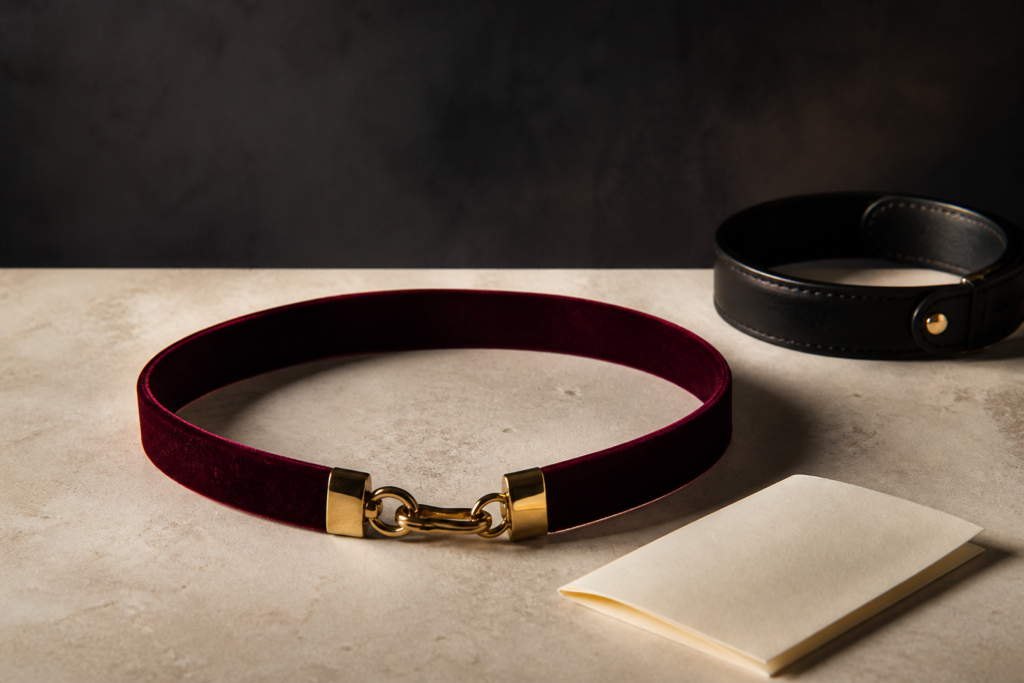
Discretion extends beyond your inbox. Plain outer packaging does not, by itself, confirm what appears on a carrier label, customs document or payment record. Check the published shipping and packaging notes and ask which detail applies to the existing order. If an enquiry needs a reference photograph or product description, share only what is necessary. An image link is not a confidential document vault; the privacy policy explains the services and recipients involved in handling messages. In this space, the object itself is presented simply, without spectacle, awaiting your private interpretation. A product photograph, for example, may show the item on a clean background, with no human usage scenes, so that the object itself remains neutral—a canvas for your own imaginings rather than a scene imposed upon you.
The Respectful Echo
Communication, too, is part of the trust. A seller who writes with calm clarity, who answers without pressure, who remembers that you are an adult making a free choice—such communication is a kind of quiet honor. You may ask about fit, about care, about the rhythm of the order. A useful reply identifies what is confirmed and what remains unanswered; a reassuring tone is not confirmation of a product or privacy detail. This is not service; it is a dialogue between equals, and it leaves both of you intact.
A Freely Given Pause
Ultimately, the privacy checklist is not a chore. It is a ritual of self-possession. You choose what to reveal, you ask for what you need, and you pause before you commit. That pause is not hesitation; it is awareness. It is the space where trust takes shape—freely given, never assumed. In a world that often rushes toward exposure, the decision to remain discreet is a quiet act of power.

So when you prepare your next enquiry, let it be a calm one. Gather only what is necessary. Confirm every detail in writing. Check the published terms and the specific reply rather than assuming that plain packaging makes the transaction anonymous. This is not about secrecy; it is about sovereignty. And it is yours to keep.
Privacy and trust
Private choices deserve clear information. Read the privacy and discreet-order notes before you decide.